
Assoc. Prof. Ken Sakai (School of Business Administration) Wins the Henrietta Larson Article Award from Business History Review
2026/08/17
Associate Professor Ken Sakai (School of Business Administration, Hitotsubashi University), along with Associate Professor Takashi Hirano (Musashino University) and Professor Pierre-Yves Donzé (Osaka University), recently received the Henrietta Larson Article Award, given annually for the best articles in Business History Review.
Business History Review is one of the world's most prestigious academic journals in the field of business history. Each year, it awards the Henrietta Larson Article Award to the most outstanding papers published in the journal.
The awarded paper can be accessed here.
Housewives and the Growth of the Japanese Electrical Appliance Industry, 1950-1990 | Business History Review | Cambridge Core
<From Associate Professor Ken Sakai>
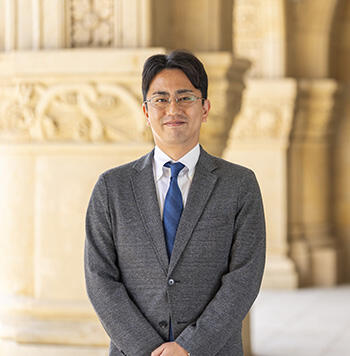
I am deeply honoured to receive the 2026 Henrietta Larson Article Award, presented annually to the best article published in Business History Review. This article is the result of a collaborative project with Takashi Hirano (Musashino University) and Pierre-Yves Donzé (Osaka University), and I would like to express my sincere gratitude to everyone who supported this research.
Our study demonstrates, through a wide range of historical sources, that Japanese housewives actively contributed to household appliance innovation through women's magazines during the country's period of high economic growth. The business history of this era has often been told from the perspective of male executives, employees, and engineers, while women--particularly housewives--have been portrayed as peripheral actors. This historical narrative reflects the perspectives that have long shaped the writing of business history. Even today, outside Japan, the image of Japanese housewives during Japan's postwar high-growth period as passive supporters of the family remains widely shared.
The significance of our study extends beyond showing that consumers participated in product development. By revealing how some housewives, despite the constraints of a gendered division of labour, actively engaged with companies and contributed to the creation of new products and value, we offer a new perspective on the history of Japan's high-growth era. We also highlight the historical role of women's magazines as a platform that connected housewives--who had often been positioned outside or at the margins of business activity--with companies. This, too, represents an important contribution of our research.
Revisiting history from new perspectives allows us to question assumptions that are often taken for granted and, in doing so, contributes to a deeper understanding of contemporary management and organisations.
This award is a tremendous encouragement to continue developing research that bridges organisation theory and business history. I hope to further share the results of this work with the international scholarly community while also contributing to education and research at Hitotsubashi University.