
Farm to Glass: Pioneering the Circular Economy in Japan's Beverage Industry
2026/10/19
On August 31st, Shigeharu Asagiri--the visionary entrepreneur behind COEDO Brewery's sustainable business model--welcomed 30 international finance researchers for a site visit as part of the International Conference focused on sustainable finance. The event sparked vibrant discussions on the evolving landscape of sustainability. Session host Takeshi Matsui, a professor at Hitotsubashi University's School of Business Administration, emphasized that sustainability is no longer just a trend, but a critical imperative for society, consumers, and the financial sector alike. He highlighted COEDO Brewery as a prime example of a company that has seamlessly integrated these principles into its core business strategy. The session featured a presentation by Mr. Asagiri, followed by an interactive Q&A where attendees explored actionable approaches to sustainable growth.
Mr. Asagiri is a graduate of Hitotsubashi University's Faculty of Commerce and Management and currently serves as a counselor to the university.
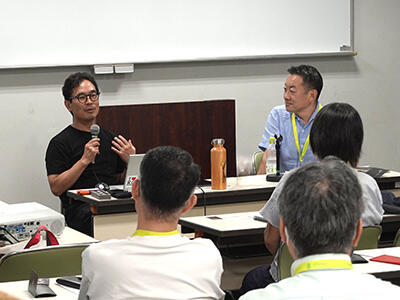
The session was held in Kawagoe City, where COEDO is located, a one-hour drive from Tokyo.
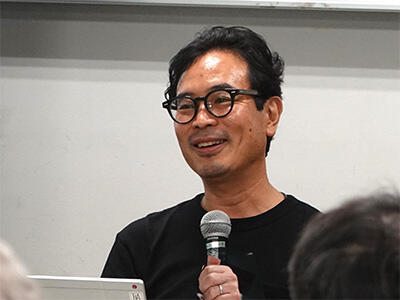
Speech by Mr. Asagiri
Three pillars of COEDO's Business Model
COEDO is a beer brand operated by Kyodo Shoji Co., Ltd. Kyodo Shoji was originally established as a trading company specializing in organic agriculture and has promoted chemical-free farming for decades. I am the second-generation CEO of Kyodo Shoji. About 30 years ago, the company entered the craft beer business. Although it remains small compared to major manufacturers such as Asahi and Kirin, it has become one of Japan's largest microbreweries.
COEDO's approach to sustainable brewing is based on the concept of "Farm to Glass." We have developed our business by connecting farming, food production, brewing, recycling, and global distribution. Today, COEDO Brewery exports its craft beer to more than 30 countries.
COEDO's business model is built around the intersection of three major pillars: 'Impact & Governance', 'Global Quality', and 'Growth & Innovation'. For the first pillar, we became Japan's first alcohol beverage manufacturing company to receive B Corp certification, an international standard requiring a rigorous assessment covering approximately 200 criteria related to environmental and social performance, governance, and accountability. On quality, we were named Champion Medium International Brewery at the 2026 AIBA (Australian International Beer Awards)--one of the largest beer competitions in the world--capturing 6 medals among over 2,200 global entries. For growth, we are honored to be recognized as one of the METI 300 Small and Medium Enterprises by the Japanese government, which acknowledges 300 promising SMEs across five categories, including business growth and productivity.
A Closed-Loop "Farm to Glass" Architecture
At the center of COEDO's strategy is a closed-loop ecosystem connecting four stages: 'cultivate', 'process', 'distribute', and 'recycle'. The objective is to create a zero-waste system in which materials and energy are continuously circulated within the local economy. Brewing naturally generates significant organic waste, particularly spent malt grains. COEDO diverts 100% of its spent grains to local livestock farmers, who use them as cattle feed. Wastewater from the brewery is treated in a biogas plant, where methane fermentation generates energy. The remaining organic sludge is processed into biomass fertilizer and returned to agricultural fields, including the company's own barley fields.
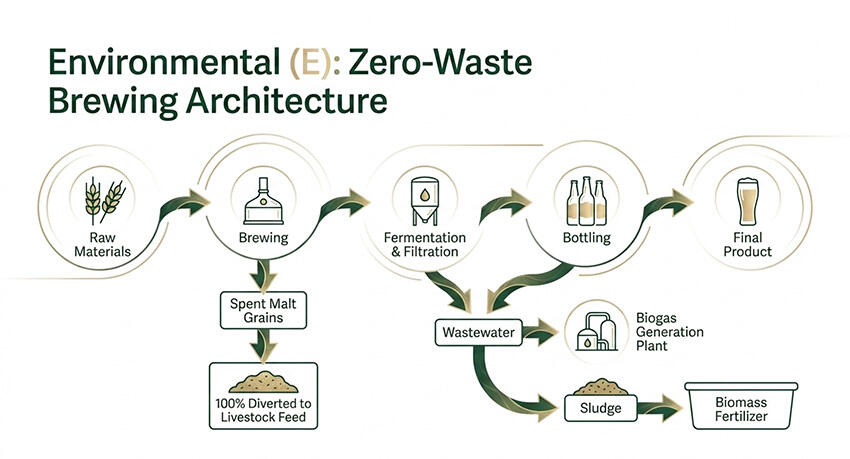
This system turns what would traditionally be industrial waste into valuable resources. With support from the Saitama Prefecture Food Circular Economy Grant, we installed advanced sludge-dehydration equipment. This process substantially reduces the water content of the sludge, transforming it into safe biomass fertilizer for local farmers.
The circular model produces environmental, economic, and social benefits. Environmentally, it reduces waste and GHG emissions. Economically, it eliminates approximately four million yen in annual waste-disposal costs, turning a cost center into a potential revenue-generating asset. We also benefit from support provided by local governments and financial institutions. Government grants and subsidies have helped finance circular-economy facilities, including equipment for converting wastewater sludge into fertilizer. Local banks have also provided financing under favorable conditions for our agricultural and business expansion. Socially, it provides local farmers with traceable and affordable fertilizer while strengthening relationships between agriculture and manufacturing--relationships we see as essential to developing our circular business model.
Regenerative Agriculture and Local Communities
COEDO's agricultural activities go beyond conventional organic farming. We promote regenerative agriculture, which aims not simply to maintain the environment, but to actively improve soil health and biodiversity. By avoiding chemical pesticides and synthetic fertilizers, the company seeks to protect microbial diversity and create more resilient agricultural systems.
This approach is particularly significant in Japan, where the share of organic agriculture remains very low. COEDO is working to expand environmentally responsible agriculture and strengthen domestic supply chains. We also aim to cultivate approximately 1,000 hectares of barley fields, including unused or abandoned farmland.
Abandoned farmland is an increasingly serious issue in Japan. Many farmers have stopped cultivating their land, while inherited farmland is often not sold because of its connection to family history. COEDO is therefore working with local governments to identify ways of using such land for barley and wheat production. These crops require relatively little labor: apply manure to the field, sow the seeds, and you can harvest roughly six months later. This makes them ideal for the efficient utilization of otherwise underutilized farmland.
We also see consumer education as an important part of our social mission. Through our organic shops and other initiatives, we communicate the connection between agriculture, soil regeneration, consumption, and sustainability. We believe that once consumers understand the value behind our products and production methods, they are more likely to support them through their purchasing decisions.
Combining Craftsmanship with Technology
COEDO combines traditional brewing craftsmanship with AI and IoT technologies. Master brewers possess valuable tacit knowledge developed through years of experience, and we are working to capture and share this knowledge using digital technologies. In collaboration with NEC, we have developed technology to record and utilize knowledge accumulated within the company and the wider brewing industry.
We are also pursuing process innovation through the use of 'koji', a microorganism traditionally used in Japanese 'sake' production. Conventional beer brewing relies on malt enzymes to convert starch into fermentable sugars. However, Japan has limited malting infrastructure, meaning that much of the malt used by Japanese brewers must be imported.
'Koji' can perform a similar function by producing enzymes that convert starch into fermentable sugars. COEDO is therefore developing a uniquely Japanese approach to beer production that could reduce dependence on imported malt and make it easier to use domestically grown barley and wheat. In this sense, we are attempting to transform a brewing process that Japan originally imported approximately 200 years ago by incorporating traditional Japanese fermentation technology.
Dialogue with audiences
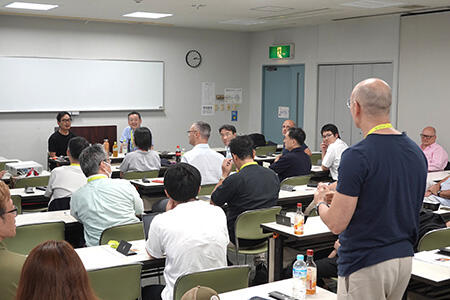
During the Q&A session, participants' interest centered on COEDO's philosophy and strategy, specifically whether its circular-economy approach was driven primarily by internal conviction or as a strategic decision for competitive advantage.
Mr. Asagiri explained that both factors are important. Younger consumers in Japan and overseas increasingly value ethical consumption and circular-economy principles. At the same time, producing raw materials domestically can help control costs, particularly when the Japanese yen is weak. Organic farming also creates additional product value. By integrating agriculture, brewing, recycling, and distribution, we create value through the synergy of these combined processes.
COEDO does not compete directly with major beer manufacturers on price. Its products are positioned as premium craft beers, with a 350 ml can costing approximately 300 yen compared to around 200 yen for a major-brand beer. Instead of competing on low prices, we emphasize quality, uniqueness, and the story behind our products. Our success at international beer competitions, including six medals at the Australian International Beer Awards, supports this positioning.
Our experience suggests that a circular economy can be more than an environmental concept: when designed as an integrated business model, it can create economic and social value while providing a distinctive source of competitive advantage.